I just finished reading Jonathan Salem Baskin’s recent blog “The Fatwa on my Head” http://dimbulb.typepad.com/my_weblog/2009/05/the-fatwa-on-my-head.html , and thought his insights timely given my thoughts after our CMO Thought Leadership Summit this past week.
My favorite quote from his blog is “Fond feelings toward names or logos don't have a direct link to sales. We can strive to make people think happy thoughts until we've exhausted our marketing budgets, but if branding is intended to get people to think about branding, it's sort of a circular, pointless pursuit.”
One of the single biggest take-aways from our summit, the breakout sessions and the conversations at breaks, dinners, and our reception, is the fundamental shift in marketing from brand building thru messaging, creative advertising and big marketing campaigns, to driving the growth agenda for your company by influencing the company wide behaviors your demonstrate.
I think about a recent conversation I had with Todd Townsend, new head of marketing at Qwest ( recent CMO at Sonic Drive In ), and when I asked him the single biggest take away from his time at Sonic that Qwest can benefit from, he quickly responded the focus on operational excellence within marketing and the entire organization. Susan Lintonsmith from Red Robin Restaurants, Ram Menon from Tibco, Mike Hogan from Gamestop, Scott Lutz from SAP, Kim Feil, in her keynote presentation, on her progress and plans at Walgreens, Barb Dondiego from Level 3 Communications, Ted Rubin at elf Cosmetics, Phil Clement at Aon, and others all had conversations with me recently in which their ability to influence company wide behaviors and customer facing employee buy in and commitment to customer service is what’s helping drive the brand.
Clearly we as marketing officers in our companies need to understand our target customer segments, develop “high impact”, clearly defined messaging and differentiation, etc. and implement programs to educate and influence our target audience as to why we are the best, or different, etc. But our role in driving the “actions talk louder than words” reality is critical to our success.
I also think that companies and Brands that have focused over the years on Brand Communications and campaigns exclusively are having a harder time moving to this “always on” social marketing approach as it requires a customer and partner engagement and a company wide behavior shift.
Does your company behavior align with your brand messages and promises?
Monday, May 25, 2009


Sunday, May 24, 2009
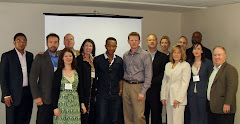
80 CMOs Share Ideas at The CMO CLUB Thought Leadership Summit, May 19-20, 2009

Thanks to all the CMOs and Special Speaking Guests for our CMO Thought Leadership Summit Last Week. I am already working on making our November Summit in San Francisco even more valuable and fun. More to follow and CMOs can register for the November Summit at www.signmeup.com/65111
Thursday, May 21, 2009
If you had a 10% increase in budget for 2nd half 2009, how would you spend it? CMOs at The CMO CLUB Summit Weigh In
I asked this question of the CMOs at our CMO CLUB Thought Leadership Summit this week with some interesting results:
1) 48% would spend incremental funds on demand generation programs/tools (both B2B and B2C)
2) 24% would spend it on additional headcount
3) 18% on social marketing programs.
Demand generation and customer acquisition remains the top priority for CMOs. Interestingly enough, the focus on demand generation is not just for B2B with many of the concepts and approches now of value and needed in B2C. Where would you spend a 10% budget increase?
1) 48% would spend incremental funds on demand generation programs/tools (both B2B and B2C)
2) 24% would spend it on additional headcount
3) 18% on social marketing programs.
Demand generation and customer acquisition remains the top priority for CMOs. Interestingly enough, the focus on demand generation is not just for B2B with many of the concepts and approches now of value and needed in B2C. Where would you spend a 10% budget increase?
Wednesday, May 20, 2009
John Legend Meets with Top CMOs at The CMO CLUB Summit to Discuss Music and Brands

A group of CMOs at The CMO Thought Leadership Summit met with John Legend prior to his private performance for CMOs at The CMO Thought Leadership Summit on May 19th to discuss new ways to align music and brands.
Some of the CMOs in the meeting included Patrick Crane- LinkedIn, Kim Feil - Walgreens, Terri Graham - Jack in the Box, Richard Stumpf - Cherry Lane Music, Leo Tokar - Kaiser Permanente, Christopher Mack - NAMD, Sonny Ganguly - WeddingWire, and John Moser, Denihan Group.
The CMO Club May Summit, NYC: “Earned Media”
This breakout session featured MaryLee Sachs, US Chairman of Hill & Knowlton; Jory Des Jardins, Founder of BlogHer; Gary Spangler of Dupont; and Ted Lowen, Global Director of Communications for BASF
MaryLee began with the question: “With the role of media transforming, how is this affecting brand communications?”
Gary: People are reading traditional press less frequently than they used to. B2B behavior is beginning to match B2C models in that persona references are becoming a more valued way to do business. We’re broadcasting now, but we’re looking to do more engagement.
Jory: My background was in publishing – I was traditional media. But I got hooked in the digital thing during the Web 1.0 days, and blogging gave me a chance to get myself published. Blogging technology began to develop, and as more and more women began to blog they wanted to connect and build their reputation among one another. We saw a lot of interest from marketers to reach this audience, and so we started BlogHer in 2005. Over 2,500 of the bloggers in our network are engaged with brands now, and we have about 50,000 bloggers in the network in all.
Ted: Since 2005 there’s been this velocity in change that’s happening among major media. They’re finally starting to face what’s going on with their business models and there’s a lot of soul-searching and painful transitions going on. They want to understand where social media is going to drive their business in the future.
MaryLee noted that the FDC is starting to look into how bloggers interact with brands, and asked the panelists to comment on the interaction of ethics in the new media world.
Gary: Transparency matters a lot, and brands have shown repeatedly that when they try to enter this space inauthentically, that’s what makes the headlines. New media has opened the channels to gain insights and interact with our audience, but since it’s no longer a one-way correspondence it needs to be done the right way. On a related note, social media is also beginning to affect the way HR works, as younger people are coming into the workforce and expecting to be able to use these new tools.
Jory: I think at this point brands are becoming more comfortable working in a social media context. Recently Forrester released a report supporting sponsor conversations, which is when a brand sponsors a blogger to review a product. But I think we need to be even more specific. There’s no illegal way to do it, but there are emerging practices for what is accepted, especially around context and disclosure. In BlogHer we applied journalistic ethics first to the way our bloggers interact among the network, but then we extended that to how bloggers and brands interact.
Ted: Issues management and reputation protection for your organization still comes down to two words: authenticity and speed. People expect your company to respond online in the way they would in any traditional media format, but what’s changed is the speed in which brands need to respond.
“There’s a difference between reaching the overall top bloggers and reaching your top bloggers," said Jory. "It’s important to get in front of the bloggers who will write about your brand, and want to."
A member of the audience asked how to find the right bloggers, and Jory admitted it’s a manual process that requires you to do your homework. “There are tools to find these things, but there are not shortcuts,” she said. “A lot of times it’s all about following the conversation first, knowing where it’s going, and then reaching these subgroups.”
Gary added that a good way to uncover potential bloggers is to check out who’s talking about your brand on Twitter first, then picking out the best ones after a vetting period.
“The right people are out there,” said Ted, citing an example of how even in the industrial space there are a select few bloggers who get it and write about it, and they’re well read by others in the industry.
For a lot of bloggers, recognition is as good as currency. There is compensation and there is not compensation. For example, we don’t compensate bloggers for talking about a product, but we would pay them for their expertise.
MaryLee’s final question looked to the future and what lies ahead for brands and social media.
“We still have a bias toward traditional marketing tools and techniques, but things are shifting quickly,” Ted said.
Gary found it was important to have someone on board who really understands the space and is able to translate traditional efforts into the digital sphere. And don’t forget to bring a WOM agency into the strategy.
Jory’s parting advice for brands is to start small and build a case for yourself. “The question is no longer should we invest in social media, but how much, and how much do we get back,” she said.
MaryLee began with the question: “With the role of media transforming, how is this affecting brand communications?”
Gary: People are reading traditional press less frequently than they used to. B2B behavior is beginning to match B2C models in that persona references are becoming a more valued way to do business. We’re broadcasting now, but we’re looking to do more engagement.
Jory: My background was in publishing – I was traditional media. But I got hooked in the digital thing during the Web 1.0 days, and blogging gave me a chance to get myself published. Blogging technology began to develop, and as more and more women began to blog they wanted to connect and build their reputation among one another. We saw a lot of interest from marketers to reach this audience, and so we started BlogHer in 2005. Over 2,500 of the bloggers in our network are engaged with brands now, and we have about 50,000 bloggers in the network in all.
Ted: Since 2005 there’s been this velocity in change that’s happening among major media. They’re finally starting to face what’s going on with their business models and there’s a lot of soul-searching and painful transitions going on. They want to understand where social media is going to drive their business in the future.
MaryLee noted that the FDC is starting to look into how bloggers interact with brands, and asked the panelists to comment on the interaction of ethics in the new media world.
Gary: Transparency matters a lot, and brands have shown repeatedly that when they try to enter this space inauthentically, that’s what makes the headlines. New media has opened the channels to gain insights and interact with our audience, but since it’s no longer a one-way correspondence it needs to be done the right way. On a related note, social media is also beginning to affect the way HR works, as younger people are coming into the workforce and expecting to be able to use these new tools.
Jory: I think at this point brands are becoming more comfortable working in a social media context. Recently Forrester released a report supporting sponsor conversations, which is when a brand sponsors a blogger to review a product. But I think we need to be even more specific. There’s no illegal way to do it, but there are emerging practices for what is accepted, especially around context and disclosure. In BlogHer we applied journalistic ethics first to the way our bloggers interact among the network, but then we extended that to how bloggers and brands interact.
Ted: Issues management and reputation protection for your organization still comes down to two words: authenticity and speed. People expect your company to respond online in the way they would in any traditional media format, but what’s changed is the speed in which brands need to respond.
“There’s a difference between reaching the overall top bloggers and reaching your top bloggers," said Jory. "It’s important to get in front of the bloggers who will write about your brand, and want to."
A member of the audience asked how to find the right bloggers, and Jory admitted it’s a manual process that requires you to do your homework. “There are tools to find these things, but there are not shortcuts,” she said. “A lot of times it’s all about following the conversation first, knowing where it’s going, and then reaching these subgroups.”
Gary added that a good way to uncover potential bloggers is to check out who’s talking about your brand on Twitter first, then picking out the best ones after a vetting period.
“The right people are out there,” said Ted, citing an example of how even in the industrial space there are a select few bloggers who get it and write about it, and they’re well read by others in the industry.
For a lot of bloggers, recognition is as good as currency. There is compensation and there is not compensation. For example, we don’t compensate bloggers for talking about a product, but we would pay them for their expertise.
MaryLee’s final question looked to the future and what lies ahead for brands and social media.
“We still have a bias toward traditional marketing tools and techniques, but things are shifting quickly,” Ted said.
Gary found it was important to have someone on board who really understands the space and is able to translate traditional efforts into the digital sphere. And don’t forget to bring a WOM agency into the strategy.
Jory’s parting advice for brands is to start small and build a case for yourself. “The question is no longer should we invest in social media, but how much, and how much do we get back,” she said.
The CMO Club May Summit, NYC: “How CMOs Add More Value to Sales”

This breakout session featured Jay Mitchell, Co-founder of Motum; Mark Oakey, SVP Global Sales, SAP; and Greg Van Acker, SVP Sales, OKI Data
Marketing-qualified leads and sales-qualified leads are not created equal, according to Mark. Because the truth is, sales-qualified leads are worth a lot more. If there is not a compelling value proposition the marketing team can lay out, they must manufacture it, and that’s extremely difficult to do.
Greg says the first step is answering the question, “Is there a problem we can uniquely solve?” In the current economy, a qualified lead needs to deliver today and not six months out.
How is the sales team involved in the lead generation process?
Greg: Sales is very involved. I encourage you to hold your sales people accountable for all the work they do. Even if you have an all-star on the team, if he refuses to follow up on the leads it’s going to hurt the team. Key Performance Indicator metrics should include a customer visit quota, but you must bring value to those meetings.
Mark: Because we’re trying new things all the time, the marketing and sales teams need to work closely together. The marketing team needs to meet and understand the customer. We also execute programs on a country-by-country basis as tactics shift depending on the region, and we tweak the program on a quarterly basis.
Greg said that the marketing department should be able to articulate the value proposition better than a sales person, because the marketing department should have a more refined level of expertise. And the marketing team needs to deliver analysis of what the competitors are doing, since that’s what sales teams are mostly looking to learn.
Talk to the sales team to find out what the one thing was that made a prospect pull the trigger and buy. That’s what you as a marketer needs to take back to strategy development.
Getting the sales team to gather customer references from the field should be part of their KPI. But there should not be a monetary incentive attached to it, since it creates a management issue, placing the salesperson in a position where they must report to marketing.
The CMO Club May Summit, NYC: “Leading Company Wide Change”

Keynote given by Leo Tokar, CMO of Kaiser Permanente
Leo told the story of aligning all the elements of his brand to create a company culture that future strategies could be built upon.
Analyzing the structure of Kaiser Permanente, Leo realized only a handful of departments actually had contact with the customer, while the rest had a number of differing priorities. It’s a competency-based organization where the range of responsibilities made it impossible to simply align every department around the marketing goals.
Persuasion alone was not going to do the trick. Instead, departments would need to rally around a common value proposition.
Leo met with the CEO and asked her three questions Leo asked the CEO:- Do you feel everyone on the executive team has the same view of what’s important?
- Do you think everyone has a common view of the business we’re in?
- How confident are you that if set growth and financial goals out there, that we’d meet both?
He also had to rethink the role of marketing. The marketing department’s job needed to be about putting customers, and not the marketing agenda, at the center of the business.
The resulting strategic plan for alignment turned out to be less important than the process for bringing change about. Leo needed to define accountability in very specific ways, so he created executive scorecards to move everyone through the pipeline together. Bringing together the heads of each department, he was able to ascertain what they felt were their main goals and work from there to find out how to make customers the central priority within these goals.
Each department head was now faced with bringing these newly aligned goals back to their management team and help them to understand how these initiatives would benefit business an their departments directly.
The next level down was getting buy-in from staffs. An incentive plan that tied the new goals to compensation ensured everyone would know what they needed to do to achieve company, department and personal missions.
In the end, the CEO was able to be removed from the role as “enforcer” as executives began communicating across departments to meet the common goals of the organization. In total the alignment process took 3 years.
The CMO Club May Summit, NYC: “The Role of ROI in Rebranding at a $10 Billion Company”
Keynote given by Hans VanHeukelum, VP of Global Marketing, Aon
To build sales and marketing capability, Aon had to start at the beginning and recreate their brand image.
The rebranding started internally as Aon worked to find their identity. They asked local clients what their needs were, and discovered clients wanted Aon to:
- Understand business objectives
- Provide the right mix of resources
- Bring passion and new ideas
- Become proactive problem solvers
- Be a company they could trust to do what’s best
What it came down to was 2 simple questions: “What can I do to help me client? What can I do to help a colleague help their client?”
Aon promoted this new approach with a number of initiatives, including Aon Day, where employees around the world gave a day of service, and The Client Times, a publication Aon created to report on client needs.
The rebranding process took 3 ½ years, and when it was time to launch a global team worked together to ensure employees were on board at the local level.
To build sales and marketing capability, Aon had to start at the beginning and recreate their brand image.
The rebranding started internally as Aon worked to find their identity. They asked local clients what their needs were, and discovered clients wanted Aon to:
- Understand business objectives
- Provide the right mix of resources
- Bring passion and new ideas
- Become proactive problem solvers
- Be a company they could trust to do what’s best
What it came down to was 2 simple questions: “What can I do to help me client? What can I do to help a colleague help their client?”
Aon promoted this new approach with a number of initiatives, including Aon Day, where employees around the world gave a day of service, and The Client Times, a publication Aon created to report on client needs.
The rebranding process took 3 ½ years, and when it was time to launch a global team worked together to ensure employees were on board at the local level.
Tuesday, May 19, 2009
The CMO Club May Summit, NYC: “What’s Coming in Digital Marketing”
This panel featured Patrick Crane, CMO of LinkedIn; Joel York, CMO, Xignite; and Michael Terpin, CEO, SocialRadi.us.
The digital world is in flux. While Yahoo! closed down Geocities last week and SecondLife fizzled out to become the Milli Vanilli of the social media revolution, Facebook is getting millions of new users each day and Twitter is getting boosted by the Oprah effect.
The conversation opened by inviting the three panelists to share the top 3 general trends they’re seeing in the digital space.
Patrick:
- Conversational Marketing – It’s always been happening, but we’re only now able to track it and get involved. Some of the more thoughtful brands are using the technology in exciting ways, such as Mazda’s consumer polls on LinkedIn.
- Putting faces to brands – Employees are already becoming the voice of your brand.
- Re-targeting – Retargeting is placing cookies on visitors to a site and then matching ad content to the types of sites they visit afterwards. It’s an a great way to tailor advertising.
Joel:
- More convergence and opportunities across media – We’re seeing mobile apps, and online video and television are already merging. You’ll be able to do much more to reach across all sorts of media in the future.
- Search – Search has a bigger future than just Google – we’re about to see a revolution
- Accessibility – Five years ago anybody could put up a website. Now anyone can join a social network or post a video. Marketing on the internet comes down to content and links, which go hand-in-hand.
Michael:
- Convergence of Lead Generation companies and Social is just around the corner.
- Content-based SEO strategies – People are learning to make the investment in content and accept the fact that payoff is in the long run, as SEO builds each link’s reputation.
- The coming of mobile social – As more and more plans make it more reasonable for more people to get high-speed access on their phones, there will be a huge spike in mobile social.
The question was then posed, “Do marketers need websites anymore, or are social networks enough?”
Joel said that it’s a bad idea to treat your website as a separate piece, and to instead think about it as one large network. The website may become the central hub of the conversation, but you’ll want to spread it out.
“Don’t drop your website or you’ll lose all your SEO,” warned Michael. Instead, create a network where all your social media is living out there and pointing back to you.
Next question up was “Do organizations need a mobile application strategy?”
It’s a lot like having a widget strategy a year ago, said Joel. If you want to do it, you need to make sure you make useful apps, and that they’re supported throughout your network. There are lots of bad apps out there and they make their brands look bad.
Patrick warned that the strategy of only using social platforms to broadcast your message is going to die, since you need a holistic way to track issues. Social networking is a great way to track issues ahead of time, and Patrick said that companies will thrive when they engage.
Michael predicted that this time next year there will be over 100 million users on Twitter. “It’s an amazing reporting tool,” he said. “If you went on Google five minutes after yesterday’s earthquake in California, you had nothing. If you went on Twitter, you already had hundreds of posts from around the region.”
Next question: “What are some of the interesting uses of Twitter?”
The panel agreed that crisis and issues management was a place where Twitter was giving organizations an upper-hand. But Michael added that Twitter is also making employees the face of your brand, as people are broadcasting their insider’s view of major organizations and affecting outsider’s perceptions.
Final question: “There’s a lot going on out there, so how do you guys keep up? What’s your secret weapon?”
Patrick: “We live it. We have a lot of young employees who are out there in it every day.”
Joel: “Listen to the customers. There’s always technology out there but you need to know if your audience is using it, or if they ever will.
Michael: “I use Twitter and Facebook. That’s where I spot things first.”
The digital world is in flux. While Yahoo! closed down Geocities last week and SecondLife fizzled out to become the Milli Vanilli of the social media revolution, Facebook is getting millions of new users each day and Twitter is getting boosted by the Oprah effect.
The conversation opened by inviting the three panelists to share the top 3 general trends they’re seeing in the digital space.
Patrick:
- Conversational Marketing – It’s always been happening, but we’re only now able to track it and get involved. Some of the more thoughtful brands are using the technology in exciting ways, such as Mazda’s consumer polls on LinkedIn.
- Putting faces to brands – Employees are already becoming the voice of your brand.
- Re-targeting – Retargeting is placing cookies on visitors to a site and then matching ad content to the types of sites they visit afterwards. It’s an a great way to tailor advertising.
Joel:
- More convergence and opportunities across media – We’re seeing mobile apps, and online video and television are already merging. You’ll be able to do much more to reach across all sorts of media in the future.
- Search – Search has a bigger future than just Google – we’re about to see a revolution
- Accessibility – Five years ago anybody could put up a website. Now anyone can join a social network or post a video. Marketing on the internet comes down to content and links, which go hand-in-hand.
Michael:
- Convergence of Lead Generation companies and Social is just around the corner.
- Content-based SEO strategies – People are learning to make the investment in content and accept the fact that payoff is in the long run, as SEO builds each link’s reputation.
- The coming of mobile social – As more and more plans make it more reasonable for more people to get high-speed access on their phones, there will be a huge spike in mobile social.
The question was then posed, “Do marketers need websites anymore, or are social networks enough?”
Joel said that it’s a bad idea to treat your website as a separate piece, and to instead think about it as one large network. The website may become the central hub of the conversation, but you’ll want to spread it out.
“Don’t drop your website or you’ll lose all your SEO,” warned Michael. Instead, create a network where all your social media is living out there and pointing back to you.
Next question up was “Do organizations need a mobile application strategy?”
It’s a lot like having a widget strategy a year ago, said Joel. If you want to do it, you need to make sure you make useful apps, and that they’re supported throughout your network. There are lots of bad apps out there and they make their brands look bad.
Patrick warned that the strategy of only using social platforms to broadcast your message is going to die, since you need a holistic way to track issues. Social networking is a great way to track issues ahead of time, and Patrick said that companies will thrive when they engage.
Michael predicted that this time next year there will be over 100 million users on Twitter. “It’s an amazing reporting tool,” he said. “If you went on Google five minutes after yesterday’s earthquake in California, you had nothing. If you went on Twitter, you already had hundreds of posts from around the region.”
Next question: “What are some of the interesting uses of Twitter?”
The panel agreed that crisis and issues management was a place where Twitter was giving organizations an upper-hand. But Michael added that Twitter is also making employees the face of your brand, as people are broadcasting their insider’s view of major organizations and affecting outsider’s perceptions.
Final question: “There’s a lot going on out there, so how do you guys keep up? What’s your secret weapon?”
Patrick: “We live it. We have a lot of young employees who are out there in it every day.”
Joel: “Listen to the customers. There’s always technology out there but you need to know if your audience is using it, or if they ever will.
Michael: “I use Twitter and Facebook. That’s where I spot things first.”
The CMO Club May Summit, NYC: John Legend Plays Live for The CMO Club!
After a great video clip showing some of John Legend’s recent appearances, Pete introduced the 6-time Grammy winner, who strolled up to the piano to a round of applause.
After opening with “Just a Little,” John told the audience he’s a fan of several brands represented in the room, and a lay critic of television commercials.
“So if any of you have any questions for me, I’d be happy to give you my review,” he joked.
John said that as a brand himself, he knows the importance of creating a relationship of trust you’re your audience, and delivering on the promise you make to your fans.
“But I know you guys know what you’re doing, so how about I just play some more songs?” he said, then introduced his new song, “This Time,” off the Evolver album.
Then he slid into “Been together for a while now,” a song he felt fit his personal criteria for what makes a good love song. “It’s something that people want to use at their wedding song. And this one gets used in a lot of weddings.”
John closed with “Ordinary People,” from his the Get Lifted album.
John begins his summer tour on June 27th. “Either in Milwaukee or Michigan, one of those places,” he laughed. “I’m from Ohio.”
After opening with “Just a Little,” John told the audience he’s a fan of several brands represented in the room, and a lay critic of television commercials.
“So if any of you have any questions for me, I’d be happy to give you my review,” he joked.
John said that as a brand himself, he knows the importance of creating a relationship of trust you’re your audience, and delivering on the promise you make to your fans.
“But I know you guys know what you’re doing, so how about I just play some more songs?” he said, then introduced his new song, “This Time,” off the Evolver album.
Then he slid into “Been together for a while now,” a song he felt fit his personal criteria for what makes a good love song. “It’s something that people want to use at their wedding song. And this one gets used in a lot of weddings.”
John closed with “Ordinary People,” from his the Get Lifted album.
John begins his summer tour on June 27th. “Either in Milwaukee or Michigan, one of those places,” he laughed. “I’m from Ohio.”
The CMO Club May Summit, NYC: “10 Things Millenials in Marketing Wish They Could Tell Their CMOs”
This panel, led by Carol Phillips of Brand Amplitude, features Justin Degraff of Unilever, Adrienne Waldo of Ask a Millennial, and Brian Rosenberg with Prophet
We saw the activist power of the Millenial generation in the last election, and now we’re feeling their impact in the workplace.
Top 10 Insights:
1) Context matters. Include millenials and help them feel the bigger picture. They want to become smart on what they’re asked to work on, so bring them in early.
2) Access is the key. Give them a voice and make it possible for them to be heard.
3) Inspire. Awe them with what you know and lead by example. Let them see what you’re doing on a day-to-day basis, in meetings with clients, etc.
4) Provide a reason. Help them keep the faith by explaining the rationale for things. Millenials are trained to believe there’s a reason for doing everything, and “it’s just the way we do it” is not going to be enough for them.
5) Thrive does not equal Survive. Help them grow. If they’re not learning they’re going to leave.
6) Be Direct. Don’t sugarcoat a situation. Tell them what you want and why.
7) Efficiency. They want to get things done, and they don’t want to work on in an inefficient system. If something isn’t working, it’s best to fix it.
8) Coach. Help them read between the lines, especially when it comes to office politics, which they don’t understand yet.
9) Advocate. Take their side and make sure their ideas get a chance. If they feel you believe in them they will want to live up to that.Be Flexible. Life-balance is critical to them, which is something a lot of managers misunderstand as a lack of dedication. But trust that they will get it done, since they time-shift. Often times they will work at all hours from anywhere.
10) Be Flexible. Life-balance is critical to them, which is something a lot of managers misunderstand as a lack of dedication. But trust that they will get it done, since they time-shift. Often times they will work at all hours from anywhere.
We saw the activist power of the Millenial generation in the last election, and now we’re feeling their impact in the workplace.
Top 10 Insights:
1) Context matters. Include millenials and help them feel the bigger picture. They want to become smart on what they’re asked to work on, so bring them in early.
2) Access is the key. Give them a voice and make it possible for them to be heard.
3) Inspire. Awe them with what you know and lead by example. Let them see what you’re doing on a day-to-day basis, in meetings with clients, etc.
4) Provide a reason. Help them keep the faith by explaining the rationale for things. Millenials are trained to believe there’s a reason for doing everything, and “it’s just the way we do it” is not going to be enough for them.
5) Thrive does not equal Survive. Help them grow. If they’re not learning they’re going to leave.
6) Be Direct. Don’t sugarcoat a situation. Tell them what you want and why.
7) Efficiency. They want to get things done, and they don’t want to work on in an inefficient system. If something isn’t working, it’s best to fix it.
8) Coach. Help them read between the lines, especially when it comes to office politics, which they don’t understand yet.
9) Advocate. Take their side and make sure their ideas get a chance. If they feel you believe in them they will want to live up to that.Be Flexible. Life-balance is critical to them, which is something a lot of managers misunderstand as a lack of dedication. But trust that they will get it done, since they time-shift. Often times they will work at all hours from anywhere.
10) Be Flexible. Life-balance is critical to them, which is something a lot of managers misunderstand as a lack of dedication. But trust that they will get it done, since they time-shift. Often times they will work at all hours from anywhere.
The CMO Club May Summit, NYC: “7 Actionable ideas for CMOs in a Down Economy” with Mitch Bishop, CMO, iRise
Despite the snappy name of this session’s title, Mitch notes that the ideas he’s talking about today are good during any economic situation.
Mitch takes pride in his team, which he likens to Altoids – small, but powerful. Check out iRise here.
Idea #1: Get out of your office
Go out on sales calls. Talk to the customers. Become the keeper of customer satisfaction. Now is a great time to get out there and build relationships. If you’re the head of marketing, it’s crucial to understand the challenges the sales team faces, so challenge yourself to learn what it’s like to have to meet monthly quotas and deal with customers.
Idea #2: Shift Regional
Focus resources on smaller, more targeting groups. It might not feel like you’re making the same impact, but in fact you’re getting in touch with exactly the right people. Take the outreach to the local level with theme-discussion dinners, and try to use these more intimate meetings to foster better relationships and encourage referrals.
A note on virtual events: Cost savings may be the catalyst for launching a virtual event, but you’ll do better if you approach it as a complement to a larger event program.
Idea #3: Fire your PR Agency
At the very least renegotiate your agency contract. Out-sourcing broad-based pitching is one thing, but you should build your own critical media relationships. Don’t be afraid to start with the publishers and bridge out to the editors as the relationship develops – Mitch says it works every time.
This one opened up some healthy debate, but everyone seemed to agree that if a PR agency is just pitching traditional press and not engaging with the online audience via social media, they need to be shown the door.
Idea #4: Invest in Tools
There’s no better time to get a great deal on or renew existing contracts for tools and services that could help your organization.
Idea #5: Precision Marketing
Know EXACTLY who you’re targeting. That means do the research, build your database and create an action plan from the intelligence you’ve gathered. It’s not unlike the CIA. And don’t be afraid to ask your customers for referrals; they’re worth 100x more than a cold call or email.
Idea #6: Outsource
iRise was able to outsource some initiatives with great success last year, from some of their market research to creative services. If you do some experimenting you can get some amazing results.
Idea #7: Rebuild Your Team
Develop a team that’s built to meet your business goals.
Bonus Idea #8: Own the Data
Make sure marketing is transparent and accountable by measuring everything and reporting it in a way that gets people within your organization to take the right course.
Idea #9: Make it Easier
Explore new pricing models and offer financing options. Invest in eLearning and do away with cumbersome paperwork where you can.
Idea #10: Buy a Competitor
If you have the cash, now is a great time to buy-out a competitor!
Mitch takes pride in his team, which he likens to Altoids – small, but powerful. Check out iRise here.
Idea #1: Get out of your office
Go out on sales calls. Talk to the customers. Become the keeper of customer satisfaction. Now is a great time to get out there and build relationships. If you’re the head of marketing, it’s crucial to understand the challenges the sales team faces, so challenge yourself to learn what it’s like to have to meet monthly quotas and deal with customers.
Idea #2: Shift Regional
Focus resources on smaller, more targeting groups. It might not feel like you’re making the same impact, but in fact you’re getting in touch with exactly the right people. Take the outreach to the local level with theme-discussion dinners, and try to use these more intimate meetings to foster better relationships and encourage referrals.
A note on virtual events: Cost savings may be the catalyst for launching a virtual event, but you’ll do better if you approach it as a complement to a larger event program.
Idea #3: Fire your PR Agency
At the very least renegotiate your agency contract. Out-sourcing broad-based pitching is one thing, but you should build your own critical media relationships. Don’t be afraid to start with the publishers and bridge out to the editors as the relationship develops – Mitch says it works every time.
This one opened up some healthy debate, but everyone seemed to agree that if a PR agency is just pitching traditional press and not engaging with the online audience via social media, they need to be shown the door.
Idea #4: Invest in Tools
There’s no better time to get a great deal on or renew existing contracts for tools and services that could help your organization.
Idea #5: Precision Marketing
Know EXACTLY who you’re targeting. That means do the research, build your database and create an action plan from the intelligence you’ve gathered. It’s not unlike the CIA. And don’t be afraid to ask your customers for referrals; they’re worth 100x more than a cold call or email.
Idea #6: Outsource
iRise was able to outsource some initiatives with great success last year, from some of their market research to creative services. If you do some experimenting you can get some amazing results.
Idea #7: Rebuild Your Team
Develop a team that’s built to meet your business goals.
Bonus Idea #8: Own the Data
Make sure marketing is transparent and accountable by measuring everything and reporting it in a way that gets people within your organization to take the right course.
Idea #9: Make it Easier
Explore new pricing models and offer financing options. Invest in eLearning and do away with cumbersome paperwork where you can.
Idea #10: Buy a Competitor
If you have the cash, now is a great time to buy-out a competitor!
The CMO Club May Summit, NYC: Kim Feil, CMO, Walgreens
Kim talked about how to lead high performing marketing teams in a tough economy -- how to navigate tightening budgets, outsourcing, and the fact that everyone is being asked to do more with less.
She recommends 4 steps anyone should take to adapt their teams:
- Assess team development and cohesion
- Provide clear strategy and objectives
- Commit to talent management
- And inspire them!
When organizations are in a financial pinch, there’s a challenge to balance enthusiasm about breakthrough ideas with the reality of how difficult it will be to commit resources to them. This can discourage teams, especially junior members who have not weathered recession before, but it’s imperative to explain why an idea that generates a lot of excitement one day might stay on the drawing board for a while. If not, you risk sending a mixed message.
As Kim built out the Walgreens marketing department, she realized there needed to be more synergy between agencies. Each agency worked with a different arm of the marketing team and were not engaging with one another, so Kim called a summit to bring the agencies together, get them to start a dialogue and work towards cohesion. Not only did her employees open the lines of communication, but the agencies began getting in touch to strategize, as well.
Four out of the five organization transformations Kim was a part of did not use an in-depth performance review system, which she found to be a major hindrance to uncovering problems among the talent base. In the transformation that did use a thoughtful performance review system, employees revealed some integral structural issues that needed to be fixed, allowing management to recalibrate with specific goals in mind.
With any reorganization, there are waves of energy and fatigue. Upon the launch of a new initiative, you’ll have many people on board, albeit cautiously. But after that first round of changes begins to take place, you’ll likely run into a lack of energy to continue down the course. It’s at this point when it’s most important to energize teams by showing them that the overarching goals are clear and still in the horizon. Otherwise you can lose them in what Kim calls “The Valley of Despair” – a low point in morale brought about by a lack of faith that the reorganization will ever be complete or achieve the original vision.
And take the time to let change become the norm. “People aren’t like computers,” Kim says, “You can’t just reprogram them and expect them to run smoothly right away. They need time to adjust.”
It might sound mushy at first to say “let’s make sure we care about the talent,” but too often it doesn’t get done. Bringing the right talent to an organization (and keeping them there) begins with knowing what talent you need in the first place, and what you don’t. “Don’t be afraid to fire ineffective leaders. Just do it,” Kim says. Even if someone can deliver results “their own way,” if they refuse to commit to new company values, visions and initiatives, it will trickle down and begin to affect junior members of their team and create animosity among other teams who are doing what is asked of them.
We’re in the age of what Kim calls “Inclusion Management,” where we should be asking members of our teams whether we are creating an environment that makes people feel included. Enlist an employee from the LGBT community or a minority group to become a coach who helps identify ways the rest of the organization can continue to make all employees feel like equals.
When you’re looking to inspire people, don’t be afraid to bring everyone to the table, regardless of title. If you create a War Room scenario, you can empower people to lend their own expertise when they feel like they have something valuable to contribute. “Let your people go sometimes,” Kim says. Set the goals and let them take some risks as they work out how to deliver. If you can show courage, it will catch on.
She recommends 4 steps anyone should take to adapt their teams:
- Assess team development and cohesion
- Provide clear strategy and objectives
- Commit to talent management
- And inspire them!
When organizations are in a financial pinch, there’s a challenge to balance enthusiasm about breakthrough ideas with the reality of how difficult it will be to commit resources to them. This can discourage teams, especially junior members who have not weathered recession before, but it’s imperative to explain why an idea that generates a lot of excitement one day might stay on the drawing board for a while. If not, you risk sending a mixed message.
As Kim built out the Walgreens marketing department, she realized there needed to be more synergy between agencies. Each agency worked with a different arm of the marketing team and were not engaging with one another, so Kim called a summit to bring the agencies together, get them to start a dialogue and work towards cohesion. Not only did her employees open the lines of communication, but the agencies began getting in touch to strategize, as well.
Four out of the five organization transformations Kim was a part of did not use an in-depth performance review system, which she found to be a major hindrance to uncovering problems among the talent base. In the transformation that did use a thoughtful performance review system, employees revealed some integral structural issues that needed to be fixed, allowing management to recalibrate with specific goals in mind.
With any reorganization, there are waves of energy and fatigue. Upon the launch of a new initiative, you’ll have many people on board, albeit cautiously. But after that first round of changes begins to take place, you’ll likely run into a lack of energy to continue down the course. It’s at this point when it’s most important to energize teams by showing them that the overarching goals are clear and still in the horizon. Otherwise you can lose them in what Kim calls “The Valley of Despair” – a low point in morale brought about by a lack of faith that the reorganization will ever be complete or achieve the original vision.
And take the time to let change become the norm. “People aren’t like computers,” Kim says, “You can’t just reprogram them and expect them to run smoothly right away. They need time to adjust.”
It might sound mushy at first to say “let’s make sure we care about the talent,” but too often it doesn’t get done. Bringing the right talent to an organization (and keeping them there) begins with knowing what talent you need in the first place, and what you don’t. “Don’t be afraid to fire ineffective leaders. Just do it,” Kim says. Even if someone can deliver results “their own way,” if they refuse to commit to new company values, visions and initiatives, it will trickle down and begin to affect junior members of their team and create animosity among other teams who are doing what is asked of them.
We’re in the age of what Kim calls “Inclusion Management,” where we should be asking members of our teams whether we are creating an environment that makes people feel included. Enlist an employee from the LGBT community or a minority group to become a coach who helps identify ways the rest of the organization can continue to make all employees feel like equals.
When you’re looking to inspire people, don’t be afraid to bring everyone to the table, regardless of title. If you create a War Room scenario, you can empower people to lend their own expertise when they feel like they have something valuable to contribute. “Let your people go sometimes,” Kim says. Set the goals and let them take some risks as they work out how to deliver. If you can show courage, it will catch on.
The CMO Club May Summit, NYC: Live from the Summit
Welcome to The CMO Club’s May Summit in New York City. I’m Steven Elwell with Hill & Knowlton, a CMO Club partner, and I’ll be blogging from the 2-day event. I’ll try to post live as often as possible, but please check back for additional posts as the Summit progresses.
A few facts by way of introduction: Over 80 CMOs are attending this the NYC Summit today and tomorrow. Fifty-nine percent are from B2B businesses, and 41% are B2C. The companies and organizations represented are split evenly between <$50m, $50-999m, and $1b+. Make sure to follow TheCMOClub on Twitter (http://twitter.com/TheCMOclub ), as we’ll be live-tweeting throughout, and don’t miss the rest of the conversation via #cmoclub.
A few facts by way of introduction: Over 80 CMOs are attending this the NYC Summit today and tomorrow. Fifty-nine percent are from B2B businesses, and 41% are B2C. The companies and organizations represented are split evenly between <$50m, $50-999m, and $1b+. Make sure to follow TheCMOClub on Twitter (http://twitter.com/TheCMOclub ), as we’ll be live-tweeting throughout, and don’t miss the rest of the conversation via #cmoclub.
Wednesday, May 13, 2009
June and Early July CMO CLUB Dinners Announced
I am pleased to announce a number of upcoming CMO CLUB dinners throughout the US. Exclusively for heads of marketing ( no exceptions )
Reception: 6 PM, Dinner 6:45PM
If you are a CMO or most senior marketing person in your company, register at www.signmeup.com/63475
Washington, DC, June 22 – CMO Roundtable Topic: “Leveraging Social Marketing as CMO: New Ways to Build Credibility within your Organization”; Session Leader, Dana Theus; McCormick and Schmicks, 8484 Westpark Dive, McLean (Tyson’s Corner)
Minneapolis, June 2 – CMO Roundtable Topic: “ROI and Metrics Every CMO Should Consider”; Session Leader: Chuck Martz, Global Marketing, Dow; McCormick and Schmicks, 800 Nicollet Mall, Minneapolis, MN
Dallas, June 3 - CMO Roundtable Topic: “CMO Digital Marketing Survey Report – Implications for CMOs”; Maggiano’s, 205 Northpark Center
Chicago, June 4 – CMO Roundtable Topic: “CMO Digital Marketing Survey Report – Implications for CMOs”; McCormick & Schmick's, 41 E. Chestnut St. Chicago
San Francisco, June 10 – CMO Roundtable Topic: “Social Marketing, What’s going to Stick”; Sapores Restaurant, Burlingame, CA
Denver, June 11 - CMO Roundtable Topic: “Leveraging Internal and External Resources for Going to Market”, Session Leader, Scott Lutz, VP EVP Marketing SAP; McCormick’s Fish House, 1659 Wazee Street
San Diego, June 15 – CMO Roundtable Topic: “CMO Worthy overview of Social Marketing Success”, Session Leader, Dana Todd, CMO Newsforce; La Valencia Hotel, 1132 Prospect Street, La Jolla, CA
Los Angeles, June 16 – “Turning up Customer Engagement thru Marketing” Session Leader, Evan Greene, CMO Grammy Awards, Santa Monica (TBD)
Orange County, June 17 – “Social Marketing: What Every CMO Should Know”, Session Leader, Michael Terpin, CEO SocialRadius, Scotts Seafood, Costa Mesa
New York City, June 23 - McCormicks and Schmicks, Ave of the Americas, NYC
North Carolina (Reseach Triangle), June 24
Philadelphia, July 7
Boston, July 8
Reception: 6 PM, Dinner 6:45PM
If you are a CMO or most senior marketing person in your company, register at www.signmeup.com/63475
Washington, DC, June 22 – CMO Roundtable Topic: “Leveraging Social Marketing as CMO: New Ways to Build Credibility within your Organization”; Session Leader, Dana Theus; McCormick and Schmicks, 8484 Westpark Dive, McLean (Tyson’s Corner)
Minneapolis, June 2 – CMO Roundtable Topic: “ROI and Metrics Every CMO Should Consider”; Session Leader: Chuck Martz, Global Marketing, Dow; McCormick and Schmicks, 800 Nicollet Mall, Minneapolis, MN
Dallas, June 3 - CMO Roundtable Topic: “CMO Digital Marketing Survey Report – Implications for CMOs”; Maggiano’s, 205 Northpark Center
Chicago, June 4 – CMO Roundtable Topic: “CMO Digital Marketing Survey Report – Implications for CMOs”; McCormick & Schmick's, 41 E. Chestnut St. Chicago
San Francisco, June 10 – CMO Roundtable Topic: “Social Marketing, What’s going to Stick”; Sapores Restaurant, Burlingame, CA
Denver, June 11 - CMO Roundtable Topic: “Leveraging Internal and External Resources for Going to Market”, Session Leader, Scott Lutz, VP EVP Marketing SAP; McCormick’s Fish House, 1659 Wazee Street
San Diego, June 15 – CMO Roundtable Topic: “CMO Worthy overview of Social Marketing Success”, Session Leader, Dana Todd, CMO Newsforce; La Valencia Hotel, 1132 Prospect Street, La Jolla, CA
Los Angeles, June 16 – “Turning up Customer Engagement thru Marketing” Session Leader, Evan Greene, CMO Grammy Awards, Santa Monica (TBD)
Orange County, June 17 – “Social Marketing: What Every CMO Should Know”, Session Leader, Michael Terpin, CEO SocialRadius, Scotts Seafood, Costa Mesa
New York City, June 23 - McCormicks and Schmicks, Ave of the Americas, NYC
North Carolina (Reseach Triangle), June 24
Philadelphia, July 7
Boston, July 8
Sunday, May 10, 2009
Pete Krainik Shares Latest CMO CLUB Weekly Poll Results: Who has the Most Credibility with your CEO?... - We Have Work to Do
Last week’s poll is now complete with the following results to the question, who has the most credibility with your CEO?
31% of you responded with the CFO, while over 24% said Head of Sales. Only 13.8% said you do (the CMO). I asked a number of CMOs in the club to respond to these results. A few observations:
1) There is a significant correlation between credibility and number of hours per week your CEO spends with a report. Many of you said your CEO speaks with your CFO daily, more often then any other executive.
2) The CFO many times speaks the same language as the CEO in regard to revenue, cost structures, P/L, etc. In addition many CEOs are spending more and more time with day to day business issues and results vs. more strategic initiatives.
3) No surprises on the credibility perception with the Head of Sales. However, I wonder if one year ago, before the downturn, if Sales had a higher credibility rating from CEOs?
If we as CMOs want to improve our credibility with our CEOs, we must take a larger role in driving the growth agenda for the company, add more value to demand generation and arming our sales team with the tools to close deals and ensure we drive the right balance of strategic and ROI based programs and results. I suggest you check out Patty Azzarello’s recent blog posts on this topic for some great insights into building credibility with your CEO.
This is a great question to ask again in the future to see our progress. Any other thoughts or recommendations based on these results?
31% of you responded with the CFO, while over 24% said Head of Sales. Only 13.8% said you do (the CMO). I asked a number of CMOs in the club to respond to these results. A few observations:
1) There is a significant correlation between credibility and number of hours per week your CEO spends with a report. Many of you said your CEO speaks with your CFO daily, more often then any other executive.
2) The CFO many times speaks the same language as the CEO in regard to revenue, cost structures, P/L, etc. In addition many CEOs are spending more and more time with day to day business issues and results vs. more strategic initiatives.
3) No surprises on the credibility perception with the Head of Sales. However, I wonder if one year ago, before the downturn, if Sales had a higher credibility rating from CEOs?
If we as CMOs want to improve our credibility with our CEOs, we must take a larger role in driving the growth agenda for the company, add more value to demand generation and arming our sales team with the tools to close deals and ensure we drive the right balance of strategic and ROI based programs and results. I suggest you check out Patty Azzarello’s recent blog posts on this topic for some great insights into building credibility with your CEO.
This is a great question to ask again in the future to see our progress. Any other thoughts or recommendations based on these results?
Saturday, May 9, 2009
Insights From CMOs - Demand Generation
Brian Harmon - Palo Alto Networks, Paul Dunay - Avaya, Jeff Ogden - Author, and Jon Miller - Marketo share insights on demand generation in this new social marketing environment. May 8 2009
MP3 File
Great discussion on the changing approach customers are taking for learning about companies and making decisions about buying products and solutions.
Highlights include:
- the changing role of sales and marketing in this lifecycle
- understanding your best sources of revenue across existing customers, new leads and lead nurturing
- the importance and approaches for truly understanding your customers
- setting expectations up front with sales on marketing's role and metrics for demand generation
- the intersection of brand and demand generation.
MP3 File
Great discussion on the changing approach customers are taking for learning about companies and making decisions about buying products and solutions.
Highlights include:
- the changing role of sales and marketing in this lifecycle
- understanding your best sources of revenue across existing customers, new leads and lead nurturing
- the importance and approaches for truly understanding your customers
- setting expectations up front with sales on marketing's role and metrics for demand generation
- the intersection of brand and demand generation.
Subscribe to:
Posts (Atom)



 Posts
Posts